Cryptocurrencies are recognized as property that can be inherited under the Civil Code of the People’s Republic of China.
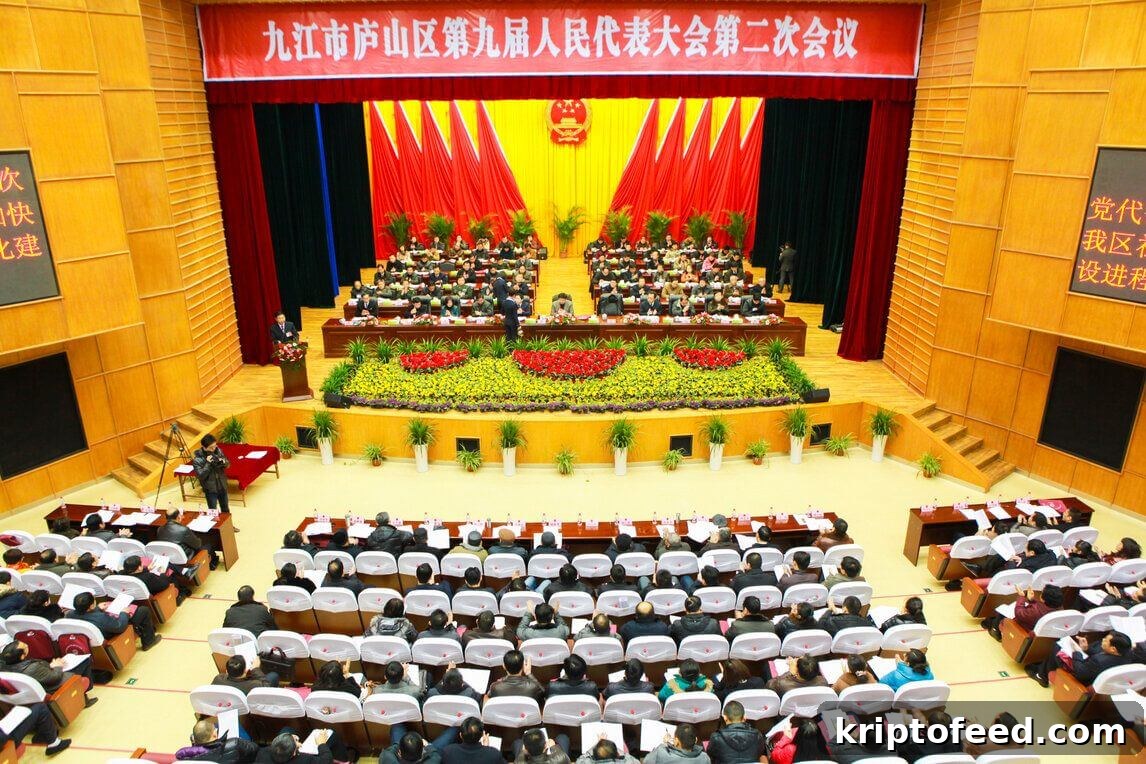
Last Thursday, during the third session of the 13th National People’s Congress (NPC), China voted to adopt the Civil Code of the People’s Republic of China. In addition to general and supplementary provisions, the Civil Code is organized into six parts covering property rights, contracts, personal rights, marriage and family, inheritance, and civil liability.
The decision to draft a civil code was announced in October 2014, and the legislative process began in June 2016.
Xinhua News Agency reported that the new Civil Code “affirms that individuals’ property rights are protected equally with those of the state and collectives, and that virtual online assets are also protected.”
Wang Chen, vice chairman of the NPC Standing Committee, told the session that completing the Civil Code “is an important element of the Central Committee of the Communist Party of China’s plans, with Comrade Xi Jinping at the core, for advancing the rule of law in the country.”
The new Civil Code will take effect on January 1, 2021.
Cryptocurrencies are now covered by inheritance law. The Civil Code specifies that “virtual assets, such as bitcoin, can be inherited,” treating them like other property lawfully acquired by an individual.
Beyond recognizing cryptocurrency in the Civil Code, the explicit acknowledgment of virtual assets marks a significant legal milestone for the country.
“The Civil Code is the first law to carry the title ‘code’ in the People’s Republic of China. It sets out basic principles and rules governing civil activities and relationships. It reflects the will of the people and protects their rights and interests,” said Wang Liming.
Wang Liming is executive vice president of Renmin University of China and a law professor.
Several Chinese courts have previously ruled that cryptocurrencies constitute property protected by law. For example, the Shanghai No. 1 Intermediate People’s Court ruled that bitcoin is a legally protected asset. In another decision, the People’s Court of Futian District in Shenzhen found that ETH is a legal property with economic value.
China is also developing a digital yuan, its official central bank digital currency. While no launch date has been set, pilot tests are already underway with government agencies and in selected cities.
Yi Gang, governor of the People’s Bank of China (PBOC), said internal pilot tests have been conducted in multiple cities to evaluate the theoretical soundness, system stability, convenience, applicability, and controllability of risks associated with the digital currency.