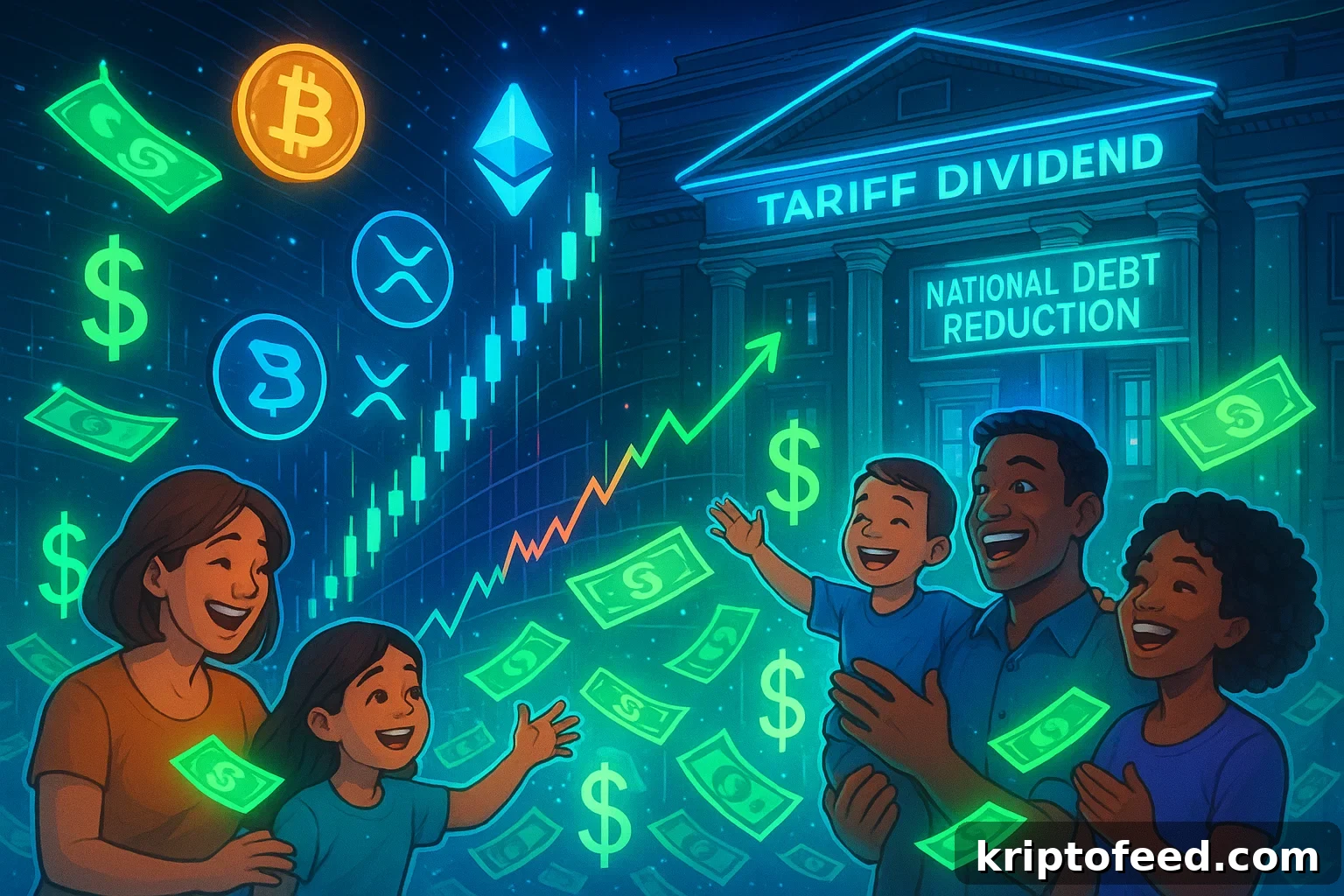
- Trump is reportedly considering tariff rebates of $1,000–$2,000 for American households.
- The rebate aims to reduce the $37 trillion national debt but faces significant legal hurdles.
- Analysts expect targeted altcoin surges rather than a broad crypto rally.
President Donald Trump is reportedly considering sending tariff rebates to American households in amounts ranging from $1,000 to $2,000 as a kind of “dividend for the people.” The proposal could influence consumer spending and financial markets if implemented.
The policy’s stated goal is to help reduce the nation’s roughly $37 trillion national debt. Trump proposes funding the rebate from revenue generated by his aggressive tariff program.
Trump’s tariff dividend: policy and legal challenges
The tariff revenue Trump points to has already generated about $215 billion so far in 2025, and some projections suggest it could reach roughly $300 billion by year-end. Administration officials have even claimed that tariffs might eventually bring in more than $1 trillion per year, though that estimate remains uncertain.
Trump has emphasized that lowering the national debt is a top priority, while also signaling interest in returning cash to Americans, saying the administration is “thinking maybe $1,000 to $2,000 — that would be nice.”
However, the legality of these tariff actions faces serious judicial scrutiny. The U.S. Supreme Court is scheduled to hear a case in November 2025 to decide whether the president has constitutional authority to impose sweeping tariffs. Prior rulings from the U.S. Court of Appeals for the Federal Circuit have already raised doubts.
Treasury officials have warned of risks. Treasury Secretary Scott Bessent reportedly cautioned that an adverse court decision could force the government to return collected and projected tariff revenues, with estimates ranging between $750 billion and $1 trillion. Given that legal uncertainty, the rebate proposal is far from guaranteed.
Altcoin markets: potential for a targeted surge?
Market analysts suggest that if the tariff rebate were enacted, it could spark renewed retail interest in cryptocurrencies—particularly altcoins—similar to patterns seen in 2020–2021 when pandemic stimulus checks boosted retail crypto purchases.
Research such as Marco Di Maggio’s 2023 study at Harvard found that direct cash transfers to households often increase retail participation in crypto markets, as some investors seek higher returns or an inflation hedge. During the 2020–2021 period, Bitcoin’s dominance fell from roughly 73% to 39%, in part as stimulus funds flowed into smaller tokens.
But the environment is different today: interest rates are higher than they were during the stimulus era, and total crypto market capitalization has expanded to about $4 trillion. Analysts, including strategists at Wintermute, caution that any new “alt season” is likely to be more selective—favoring coins with clear utility rather than pure speculation.
Still, the psychological boost from direct payments combined with an anticipated easing of Federal Reserve policy could reignite retail demand. Blockchains that emphasize innovation and utility—platforms such as XRP and Solana—are frequently cited among potential beneficiaries if investor attention shifts back toward projects with real-world use cases.
The eventual market response will depend on several factors: whether rebates are actually issued, the scale of funds delivered to households, the timing of any interest-rate cuts, and how investors evaluate the utility and fundamentals of individual projects. Given ongoing legal uncertainty around the tariff revenue itself, markets are likely to react cautiously, with selective gains for tokens viewed as offering tangible value rather than a broad, indiscriminate rally.