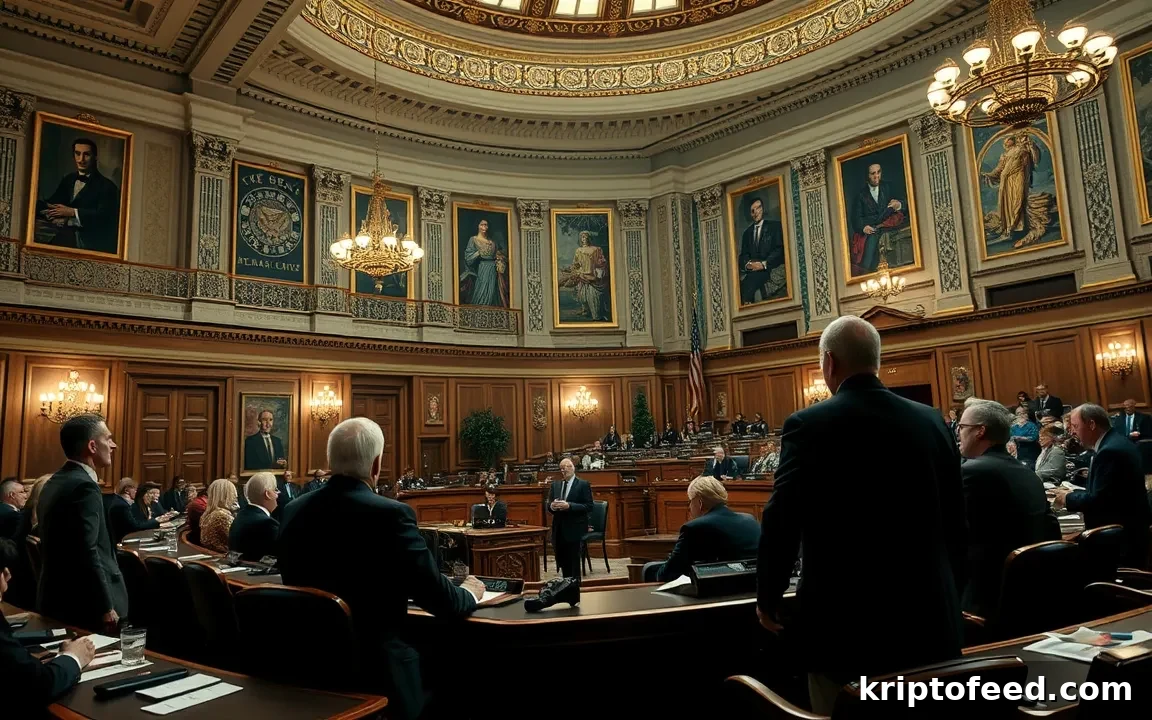
Coinbase CEO Brian Armstrong has intensified pressure on the U.S. Senate to act on crypto regulation, urging debate on the bipartisan GENIUS Act, which aims to create a national framework for stablecoins.
With more than $1 trillion in stablecoin volume settled monthly and international competitors advancing their regulatory regimes, Armstrong’s urgency reflects fears that the U.S. could lose its foothold in digital finance.
His call highlights increasing momentum among crypto leaders to pass legislation that supports innovation while providing clear rules and consumer protections.
The GENIUS Act sets uniform standards for stablecoins
Formally known as the Lummis-Gillibrand Payment Stablecoin Act, the GENIUS Act would require all stablecoins to be fully backed 1:1 by U.S. dollars, insured bank deposits, or Treasury bills — a measure designed to address solvency concerns and reduce run risk.
Only firms with a national license would be permitted to issue these tokens, ending the current patchwork of state-by-state regulation.
A three-year compliance window would give companies time to adapt, during which digital asset service providers must update their systems to meet the new standards.
Supporters argue this approach would protect users and encourage institutional adoption by establishing a clear regulatory perimeter.
Coinbase and other platforms that handle dollar-linked tokens, such as USDC, are expected to benefit if the bill becomes law, potentially unlocking broader financial applications like instant settlement and tokenized payments.
Democrats cite anti-money laundering and security gaps as concerns
Despite initial bipartisan backing, the bill faces internal hurdles.
Senate Democrats have raised objections related to national security, anti-money laundering, and consumer protections, arguing that current provisions may not go far enough to curb illicit finance.
This hesitation could delay progress before the August recess, even as Republicans and many industry leaders press for swift action.
Without a compromise, the bill could stall in committee, leaving stablecoins in continuing regulatory limbo.
Armstrong warned on X that the longer the U.S. waits, the more likely it is to fall behind regions such as the European Union, which has already passed the MiCA framework, and Hong Kong, which plans to finalize its stablecoin rules this year.
Analysts say this regulatory delay could shift innovation overseas, depriving the U.S. of leadership in blockchain-powered finance.
Industry calls the bill a turning point
If passed, the law would give stablecoin issuers the green light to operate with greater confidence, potentially attracting more traditional financial players into the space.
Coinbase’s advocacy, including Armstrong’s direct appeals to lawmakers and other lobbying efforts in Washington, signals that exchanges view regulatory certainty as key to unlocking the next phase of crypto adoption.
Still, the bill’s path to approval remains uncertain. Advancing legislation in the Senate requires 60 votes, meaning several reluctant Democrats would need to be persuaded.
With time running out before the August recess, much depends on whether lawmakers can balance risk mitigation with supporting industry growth.