- RWA projects are classified as illegal fundraising, securities issuance, or futures activities under existing law.
- Structures connected to Hong Kong and offshore entities with mainland personnel as targets are specifically highlighted.
- Liability extends across the full Web3 service chain, not only to token issuers.
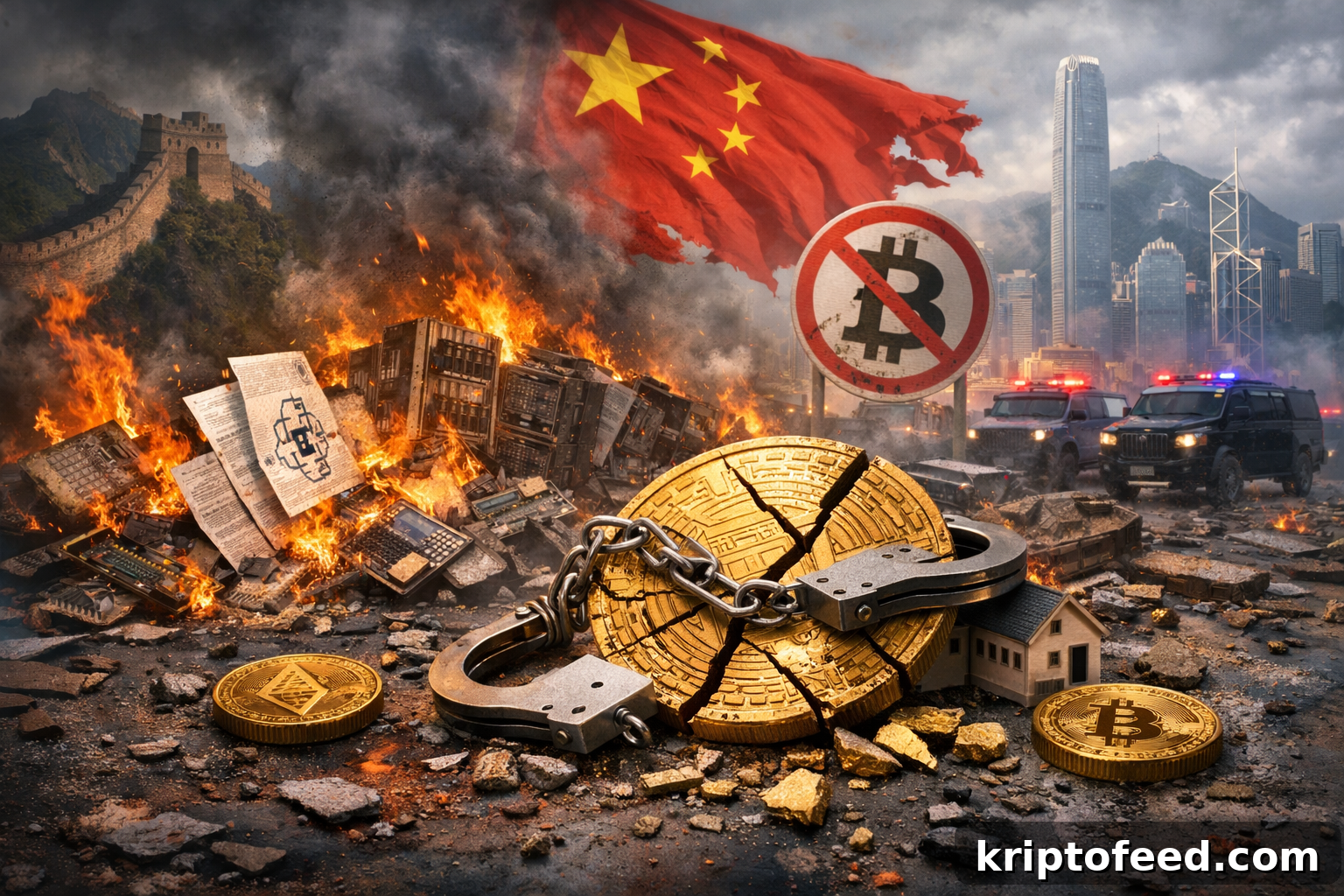
China has issued one of its clearest signals yet on digital finance by formally classifying real-world asset (RWA) tokens as illegal financial activities.
A coordinated announcement from seven major financial industry associations placed RWA tokens in the same prohibited category as stablecoins, cryptocurrencies and crypto mining.
The move removes the remaining ambiguity over whether tokenized assets might be permitted under future regulatory pilot programs or special approvals.
Regulators drew a firm line that reaches beyond project issuers to the entire Web3 service ecosystem, including operations linked to Hong Kong and offshore structures that involve mainland staff.
The statement was jointly issued by the China Internet Finance Association, China Banking Association, China Securities Association, China Asset Management Association, China Futures Association, China Association of Listed Companies and China Payment and Clearing Association.
Comprehensive regulatory warning
The associations stated that RWA activity lacks a legal basis under current Chinese law.
Tokens are characterized as fundraising and trading through token issuance or token-like rights and debt instruments—structures that regulators say create layered risks tied to the purported underlying assets.
Importantly, the agencies emphasized that no Chinese regulator has approved any conversion of real-world assets into tokens in any form, eliminating claims that projects are merely piloting or awaiting registration.
Legal observers describe the announcement as a rare example of cross-industry coordination, typically reserved for moments when regulators aim to control system-wide financial risks.
Specified legal violations
The announcement directly linked RWA activity to violations under China’s criminal and securities laws.
Public token issuance that raises funds may be treated as illegal fundraising.
Facilitating token transactions or distributing tokens without approval could be deemed an unauthorized public securities offering.
Trading models using leverage or betting mechanisms may fall within illegal futures business operations.
Regulators also rejected the assumption that token structures can guarantee ownership or settlement of the referenced assets.
Even where teams claim transparency or genuine collateral, authorities argued that uncontrolled risks still prevail.
Hong Kong and offshore pathways
The warning targeted projects that clearly attempt to evade mainland rules by relying on foreign compliance narratives.
China’s securities regulators called on domestic brokerage firms to cease participating in RWA tokenization activities in Hong Kong, extending the policy’s reach beyond the mainland.
A key feature of the directive is the liability standard applied to service providers.
Institutions and individuals who know or should know they are supporting virtual currencies or RWA-related businesses can be held accountable.
This objective standard undermines the common Web3 model of locating legal registration offshore while maintaining teams and operations inside China.
Impact across the Web3 service chain
Liability is not limited to project founders.
Technology outsourcing firms, marketing agencies, influencers, payment interface providers and operational staff all face legal risk if they support RWA projects aimed at Chinese users.
The announcement notes that even hiring a single operations employee in China could expose an offshore project to enforcement.
Regulators linked the crackdown to a rise in frauds labeled as RWA, including schemes tied to stablecoins, worthless tokens and mining narratives used for illegal fundraising and pyramid schemes.
The timing also aligns with China’s push to internationalize the digital yuan through a new Shanghai hub for cross-border payments and blockchain services, while restricting private stablecoin issuance to preserve state control over currency issuance.
Overall, the coordinated guidance makes clear that tokenizing real-world assets for fundraising or trading is not a tolerated pathway under current Chinese regulation, and that associated service providers—domestic or offshore—face heightened enforcement risk when they facilitate such projects targeting Chinese users.