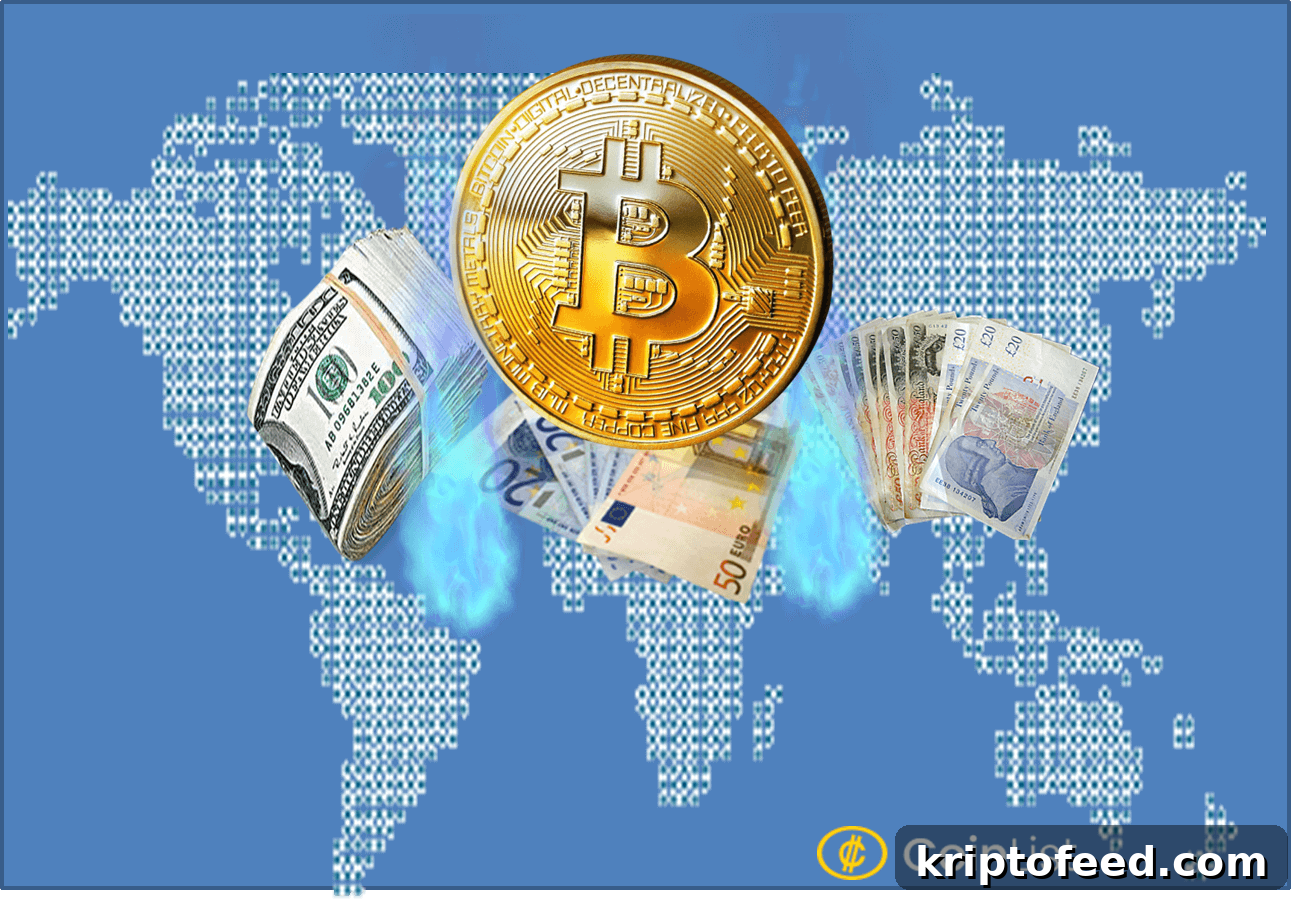
We live in an increasingly digital society, where millions of e-commerce transactions take place worldwide every day. This shift has pushed the wider use of digital currencies like Bitcoin and others. That raises an important question: could they replace fiat money in the future? This article examines scenarios and possibilities that such a shift could bring.
What Backs Fiat Money?
Traditional currencies are backed by each issuing country’s central bank. Historically, that backing was linked to gold reserves, but over time central banks have issued more currency as part of economic policy, which has contributed to general price inflation. For example, Japan—an export-driven economy—benefits from a weaker currency internationally, so its central bank may intervene to keep the yen relatively low and stimulate demand for exported goods. Conversely, the U.S. is a consumption-driven economy; a stronger US dollar tends to reflect greater economic strength.
After World War II the dollar effectively replaced the gold standard, creating what became known as the dollar standard: international trade and pricing largely aligned with the US dollar. The Bretton Woods system began to falter during the Vietnam War as the United States sent large amounts of dollars abroad to finance the conflict. Loss of confidence in the dollar led other countries to exchange dollars for other currencies and assets. In 1971 President Nixon suspended the dollar-to-gold convertibility, devaluing the currency to boost exports. Today, fiat banknotes and coins are not backed by a metal; their value rests on the trust users place in the central bank and the expectation of continued acceptance.
The Purpose of Cryptocurrencies

Cryptocurrencies, led by Bitcoin, were created to remove central bank control from money and financial systems. Many supporters view central bank interventions as a form of economic control, and decentralizing digital money is a core principle of the movement. For example, Bitcoin has a strict supply cap of 21 million coins, a feature intended to limit inflation within its own ecosystem.
As noted for years by analysts such as Olivier Garret in Forbes, monetary systems based on fiat—where central banks can print unlimited currency—have inherent weaknesses. That is one reason assets like gold and Bitcoin have become popular among investors as stores of value and protection against currency devaluation.
Fiat currency depends on trust—”fiat” itself implies consent or authorization that gives something effect—meaning each note is backed by a central bank. But what happens if that trust erodes? Cryptocurrencies, particularly Bitcoin, emerge as alternatives in that scenario. Over time, many investors have viewed Bitcoin as a refuge during periods of uncertainty, and its price has often risen during crises.
Some governments are exploring state-backed digital currencies, which would blend digital features with fiat status. Countries such as Russia, India, and Estonia have considered issuing government-backed digital currencies. Dubai announced a blockchain-based digital currency called emCash in 2016, and Venezuela launched a petroleum-backed digital currency called the Petro.
Opposition to Cryptocurrency Growth
Growing investor interest in digital currencies has met resistance from central banks and regulators around the world. Some countries have restricted crypto use, including Russia and China. Agustín Carstens, general manager of the Bank for International Settlements, criticized Bitcoin as “a speculative, high-risk toy” and pointed to environmental concerns. Regulators cite valid risks: consumer and investor protection, tax evasion, money laundering, and financing of criminal activity.
Legendary investor Warren Buffett has said cryptocurrencies are not investments but speculative bets. Speaking to Yahoo Finance, he described buying Bitcoin as a wager where someone else might pay more tomorrow, which he said is not true investing.
Key Benefits of Cryptocurrencies
Cryptocurrencies are not tied to any single state or banking system and can be used globally, which is particularly useful for unbanked populations. Major digital currencies can be exchanged for euros or other fiat currencies, and vice versa. Their decentralized nature means they are not controlled by governments, banks, financial institutions, or corporations.
A primary advantage is the elimination of intermediaries: transactions occur directly between individuals. Because cryptocurrencies are digital, they cannot be physically destroyed, damaged, or counterfeited in the same way paper money or physical commodities can. Robust cryptographic systems make duplication or forgery effectively impossible, enhancing security and trust in the ledger.
Can Cryptocurrencies Replace the Dollar and Other Fiat Currencies?
David Drake, a crypto entrepreneur and president of LDJ Capital, argues that disruptive technology is reshaping business and challenging traditional institutions. Cryptocurrencies threaten parts of the financial system because they offer advantages over conventional currencies, such as removing intermediaries and giving users greater control over their finances. They can also act as a hedge against fiat inflation.
Bill Davis, a consultant on digital strategies and public-sector design, explains that cryptocurrencies use hash algorithms to verify data integrity, representing large amounts of information as compact, non-replicable numbers. Some analysts believe cryptocurrencies will continue to grow and attract investor capital, potentially positioning them to challenge the international monetary system.
Bitcoin is already very different from the dollar in many respects. Its value has risen dramatically compared with early days—when 10,000 BTC was famously used to buy two pizzas—whereas today a tiny fraction of a Bitcoin equals the same value. Adoption remains a key challenge: many people still have never heard of cryptocurrencies or choose to ignore them. But broader user adoption is likely to increase over time as awareness and infrastructure grow.
Whether governments and investors embrace or resist this change, the momentum toward digital forms of money continues. Fiat currencies often stagnate or lose purchasing power through inflation, while some digital currencies have seen substantial value appreciation. It remains uncertain when—or if—cryptocurrencies will fully replace fiat, but their rise is reshaping how we think about money and monetary systems.