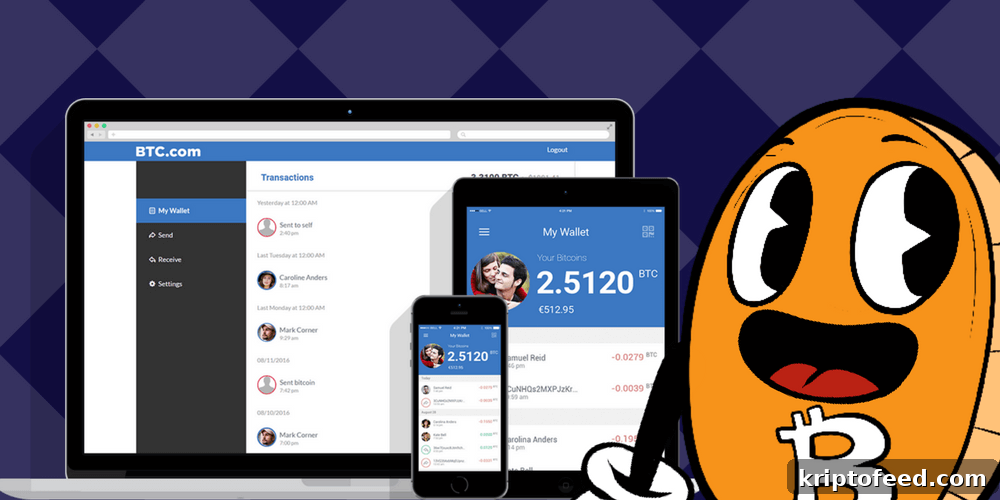
BTC.com, the first bitcoin wallet platform in the cryptocurrency market to support both Bitcoin Cash and SegWit simultaneously, recently introduced a dynamic fee system that automatically calculates the lowest fee users need to attach for their transactions to be processed on the Bitcoin blockchain.
In a blog post published January 11, the BTC.com development team said it completed an integration that determines optimal bitcoin fees based on three factors: urgency (time pressure), peak network activity, and transaction size.
Manually monitoring mempool size and network congestion is inconvenient and technically challenging for many users. Without a reliable fee estimator, users often overpay to ensure miners include their transactions. This extra burden makes everyday use of bitcoin less accessible for average consumers.
For bitcoin to function both as a store of value and a practical digital currency, the fee system should not force users to continuously analyze mempool conditions and transaction composition to make simple payments. Shifting that responsibility onto wallet software increases usability and lowers friction for nontechnical users.
Several wallets, including BTC.com, are deploying automated fee management to prevent unnecessary overspending on fees while removing the need for users to study congestion patterns. BTC.com’s dynamic fee algorithm evaluates urgency, network peak times, and transaction data size to recommend the lowest fee that still achieves timely confirmation.
Alongside the dynamic fee feature, BTC.com added Segregated Witness (SegWit), a Bitcoin Core–developed upgrade that fixes transaction malleability and reduces transaction size. By lowering transaction byte size, SegWit helps reduce fees and improves overall network efficiency.
The BTC.com team stressed that the bitcoin amount being transferred does not determine the fee; rather, fees depend on the size of the transaction data. Transactions grow in size when an address receives many small outputs over time, which increases the data required to spend those outputs. For users who transact frequently, using a SegWit-enabled wallet can significantly lower fees.
“Despite the common misconception, the amount of bitcoin you send does not impact the fee. What impacts the fee is the size of the transaction data. Without going into details, when users receive many small transactions frequently, the size of their transactions tends to become larger. If you often make bitcoin transactions, choose a wallet like BTC.com that supports SegWit,” explained the BTC.com development team.
In addition to dynamic fees and SegWit support, BTC.com has integrated a new Bitcoin Cash address format into its wallet to prevent confusion between BTC and BCH addresses. Although Bitcoin Cash is a hard fork of bitcoin, it is a separate coin; the new address format helps users clearly distinguish bitcoin (BTC) addresses from Bitcoin Cash (BCH) addresses and avoid accidental cross-chain transfers.