
- Outflows from Bitcoin ETFs and contracting liquidity have recently driven BTC prices lower
- Margin liquidations accelerated selling after key support levels gave way
- Tighter correlation with technology stocks has amplified pressure amid broader risk aversion
Bitcoin has come under heavy pressure in recent weeks, with the market experiencing a significant pullback driven by weakening demand.
What had been months of gains have been eroded by a risk-off environment, leaving traders to debate whether the recent slide is a temporary setback or the start of a deeper cycle reset.
ETF outflows add fuel to the decline
The downturn in Bitcoin has been sharp and sustained since the peak in early October above $126,000.
Since that October high, the digital asset has lost almost $800 billion in market value and has fallen to levels last seen in spring.
ETFs, which once acted as a stabilizing force for Bitcoin (BTC), are now contributing to renewed weakness.
BlackRock’s IBIT ETF, previously a large absorber of selling pressure, posted its biggest monthly redemptions on record, with $520 million withdrawn from the fund.
That reversal signals a shift in institutional sentiment and has become a key source of downward pressure.
Recent research from NYDIG highlights how ETF outflows, a contracting stablecoin supply, and changing corporate financing strategies have eroded the demand mechanics that supported Bitcoin earlier this year.
Greg Cipolaro of NYDIG described the current cycle as a “negative feedback loop,” where factors that once supported the market are now amplifying the downturn.
These changes have left Bitcoin facing steady selling at a time when broader risk appetite is also weakening.
A notable part of this shift is visible in the stablecoin market, where supply has shrunk for the first time in months and some tokens lost significant value after liquidation events.
At the same time, digital asset treasuries that were once active buyers of Bitcoin are stepping back as companies reduce liabilities through asset sales or share buybacks.
Those moves have contributed to a persistent liquidity drain across the crypto sector.
Bitcoin price outlook
From a technical perspective, Bitcoin has plunged into oversold territory and printed hammer candles, suggesting a possible short-term bounce.
Watch the $88,500 level, which capped rallies earlier in the year and briefly halted selling last week.
A sustained break above that zone could set the stage for a near-term recovery, targeting roughly $94,000 and $95,000.
However, any rebound faces stiff resistance from weak marketwide sentiment.
Bitcoin’s growing correlation with risky assets adds another complicating factor.
The correlation between Bitcoin and Nasdaq 100 futures has climbed to unusually high levels, nearing 0.96.
When tech stocks slide, Bitcoin tends to follow, and recent volatility tied to concerns about an AI bubble has hit both markets hard.
Bitcoin dominance has also fallen to multi-month lows, indicating capital is flowing out of BTC and into perceived safer havens or higher-risk alternatives.
The market has also seen heightened volatility from margin liquidations.
Leveraged positions, particularly in perpetual futures, amplified the recent move.
When BTC dropped below $87,000, more than $900 million in positions were liquidated, with long trades taking the brunt of the losses.
Liquidation cascades have become a recurring theme, deepening moves in both directions.
Momentum indicators, including the Relative Strength Index (RSI) and Moving Average Convergence Divergence (MACD), remain bearish, suggesting previous rebounds were met with aggressive selling.
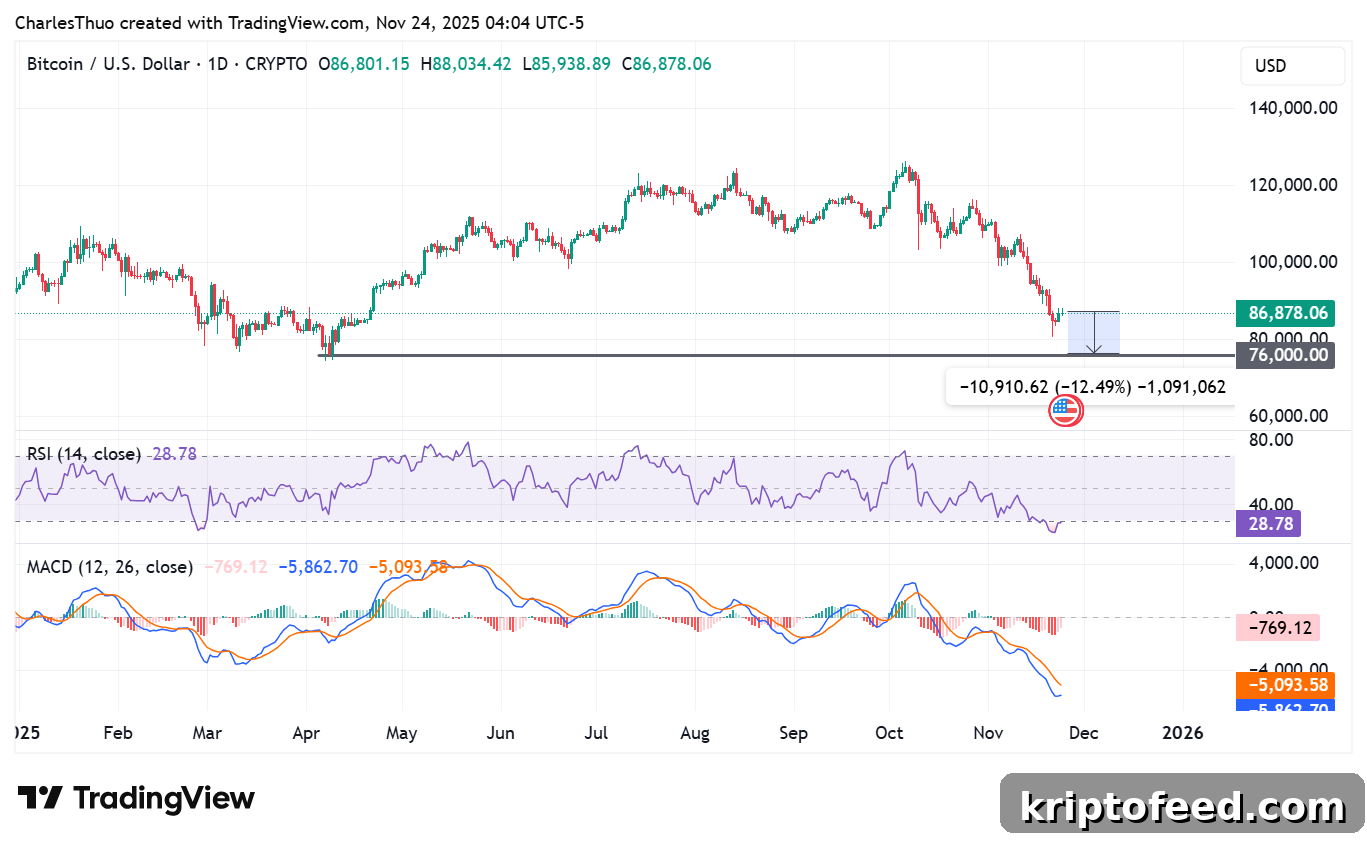
A drop below the recent lows could open the door for a retest of the $76,000 area, where Bitcoin previously consolidated during an earlier market scare linked to tax-related selling.