
Key points
- BTC slipped below $90,000 a few hours ago but has since recovered and is now trading above $91,000.
- If selling continues, the leading cryptocurrency could fall toward $85,000.
The cryptocurrency market has maintained a bearish tone in November. Bitcoin lost about 5% of its value over the past 24 hours and briefly dropped below the $90,000 mark. Prices have bounced back slightly and BTC is trading above $91,000 per coin at the time of writing.
Institutional demand weakens as sell-side flows weigh on BTC
The downward pressure has coincided with a decline in institutional demand. U.S.-listed spot Bitcoin exchange-traded funds (ETFs) recorded $254.54 million in outflows on Monday, extending a persistent run of redemptions.
According to SoSoValue, more than $1.1 billion has been withdrawn from U.S. spot Bitcoin ETFs over the past seven days. Continued or accelerated outflows could push Bitcoin prices lower in the near term.
On-chain Bitcoin data also suggests BTC may not have found a bottom and could see further short-term losses. Recent metrics show the average deposit volume into exchanges exceeded 0.9 on Tuesday, signaling increased selling pressure.
Historically, when average deposit volume into Binance rises, Bitcoin faces significant selling pressure. Binance’s exchange reserves have climbed above 580,000 BTC, another sign of mounting sell-side supply as demand remains subdued.
BTC could retest the $85,000 support level
The BTC/USD 4-hour chart appears bearish and inefficient, reflecting Bitcoin’s underperformance in recent days. The price was rejected at the 38.2% Fibonacci retracement level around $106,453 last Monday and has fallen more than 10% since then.
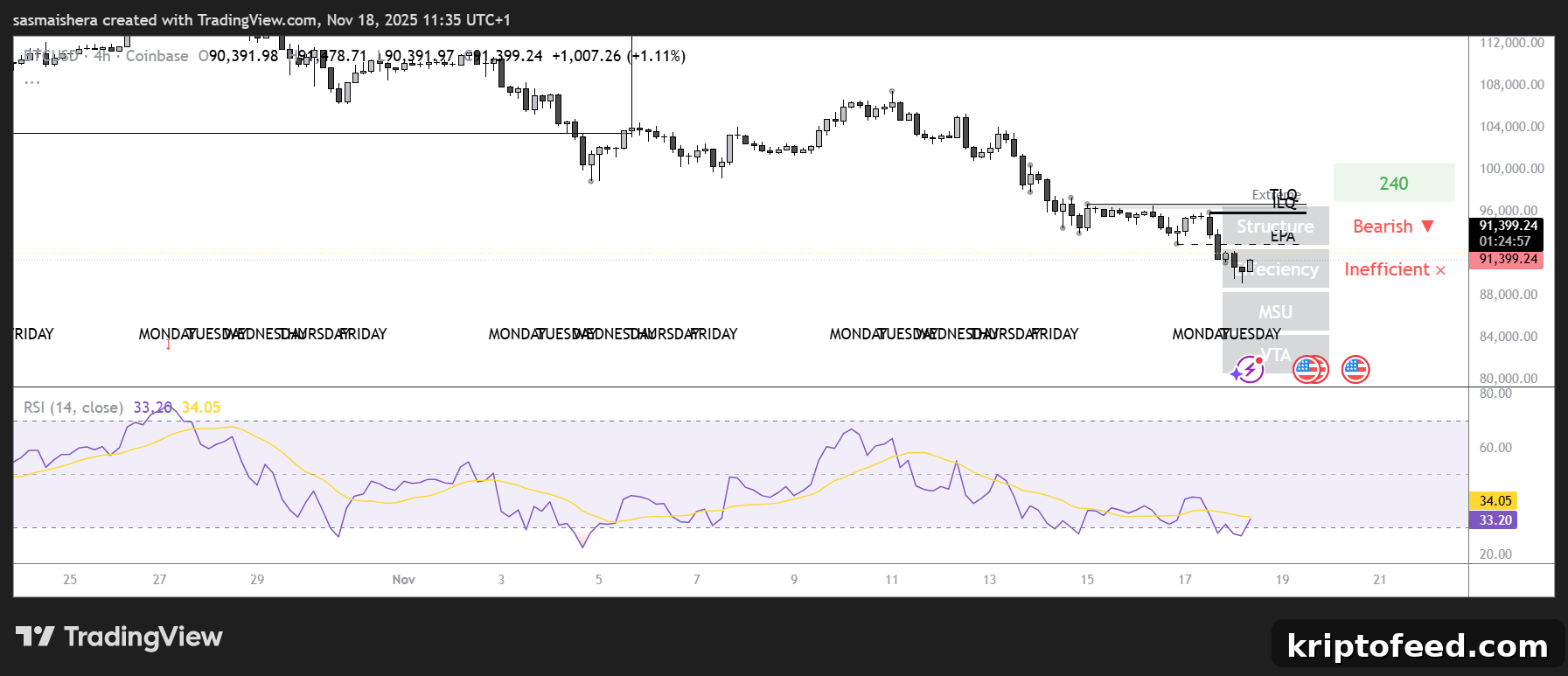
If the corrective move continues, Bitcoin could slide toward the next psychological support near $85,000. The 4-hour relative strength index (RSI) sits around 34, underscoring strong bearish momentum, while the MACD indicator also points to pronounced overselling conditions.
On the upside, a successful recovery could push BTC toward resistance near $94,253, but for now downside risks appear more pronounced given weak inflows and growing exchange reserves.