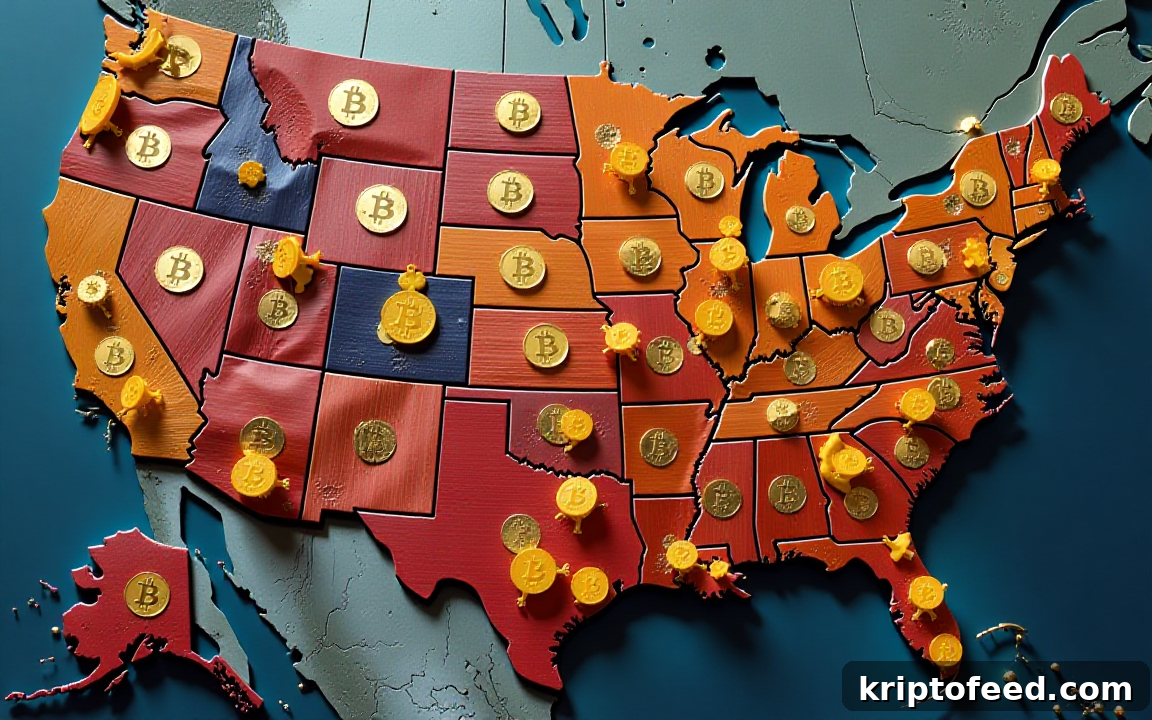
Bitcoin has officially surpassed gold in U.S. ownership, marking a significant shift in the country’s investment landscape.
According to a new report published on May 20 by Bitcoin investment firm River, roughly 50 million Americans now own Bitcoin, compared with 37 million who own gold.
These figures highlight Bitcoin’s rise as a preferred store of value and challenge traditional views of financial security and reserve assets.
As ownership grows, Bitcoin is increasingly viewed not just as a speculative instrument but as a foundational element of the U.S. financial infrastructure.
U.S. leads in global Bitcoin adoption and infrastructure
The River report notes that the United States leads the world in Bitcoin adoption, with 40 percent of all Bitcoin-related companies headquartered in the country.
American firms also hold 94.8 percent of the Bitcoin held by publicly traded companies globally, reflecting substantial institutional backing.
This dominance is supported by a robust ecosystem that includes crypto-focused startups, spot ETF launches, and policies aimed at fostering digital asset development.
Regulatory dynamics in Washington have further strengthened Bitcoin’s place in the financial system. Recent discussions about treating Bitcoin as a potential strategic reserve asset point to growing political acceptance.
Several policymakers have floated the idea of the U.S. government holding a Bitcoin reserve, signaling institutional confidence amid rising concerns about the long-term stability of the U.S. dollar.
Strategic demand rises amid economic uncertainty
The shift toward Bitcoin accompanies broader macroeconomic concerns. Moody’s recent downgrade of the U.S. credit rating, which ended more than a century of top-tier ratings, has increased interest in decentralized alternatives.
Investors increasingly view Bitcoin as a hedge against fiscal instability and inflation, especially given its fixed supply and decentralized governance model.
In the digital age, Bitcoin also offers practical advantages over gold. Easier storage, cross-border transferability, and liquidity make it an attractive option for both retail and institutional investors.
This matters at a time when digital finance is becoming the norm and traditional safe-haven assets like gold face logistical and accessibility constraints.
Rising ownership draws attention to volatility risks
While Bitcoin gains legitimacy as a reserve asset, it remains a volatile asset class. Unlike gold, which has maintained relatively steady valuations over time, Bitcoin has experienced frequent price swings—an attribute that may deter more risk-averse investors.
Nevertheless, the market appears increasingly tolerant of that volatility, as long-term returns continue to outperform many traditional assets.
Institutional support plays a key role in this transition. Major asset managers incorporating Bitcoin into portfolios further validate its status.
Meanwhile, crypto ETFs and custody services help bridge the gap between traditional finance and digital assets by allowing Americans to gain exposure to Bitcoin without navigating complex self-custody solutions.
The growth in Bitcoin ownership reflects not only changing preferences but a broader shift in how Americans view financial security and resilience.
The trend is still evolving, but the numbers now place Bitcoin ahead of gold—at least when it comes to how many Americans are betting on it.