Bitcoin remains under pressure after breaking the key $75,000–$76,000 support zone, with market sentiment cautious as ETF inflows weaken and the technical outlook deteriorates.
That said, BTC is approaching a meaningful confluence of technical support around $70,000–$72,000, where an ascending trendline and the 100-day moving average may offer the market temporary relief.
Bitcoin Price Analysis: The Daily Chart
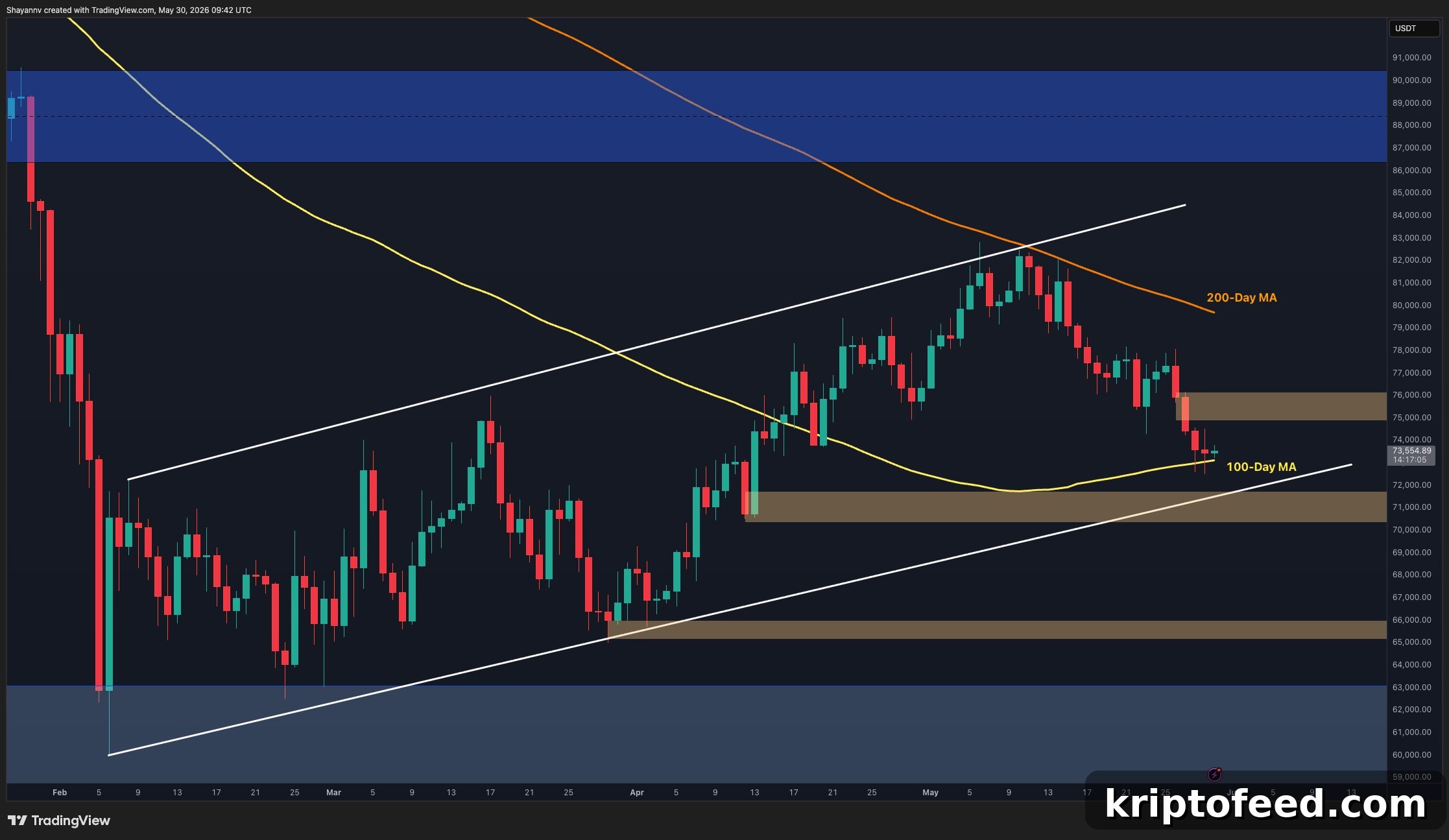
On the daily chart, Bitcoin has decisively moved below the important $75,000–$76,000 support region, which had served as a significant decision point. This breakdown confirms a bearish continuation after multiple failed attempts to reclaim the descending 200-day moving average near $80,000–$81,000.
Price is now nearing a strong support cluster between $70,000 and $72,000. This area aligns with the lower boundary of the broader ascending structure, the 100-day moving average (around $73,000), and a notable historical order block visible on the chart. When several supports converge, the chance of at least a short-term reaction or relief bounce typically rises.
If buyers defend the $70,000–$72,000 range, Bitcoin could stage a corrective recovery toward the recently broken $75,000–$76,000 zone. Conversely, a failure to hold this level would likely open the path to deeper supports near $65,000–$66,000 and potentially the broader $60,000–$63,000 demand area.
For the moment, the broader structure remains bearish unless BTC can reclaim and sustain price above $75,000–$76,000.
BTC/USDT 4-Hour Chart
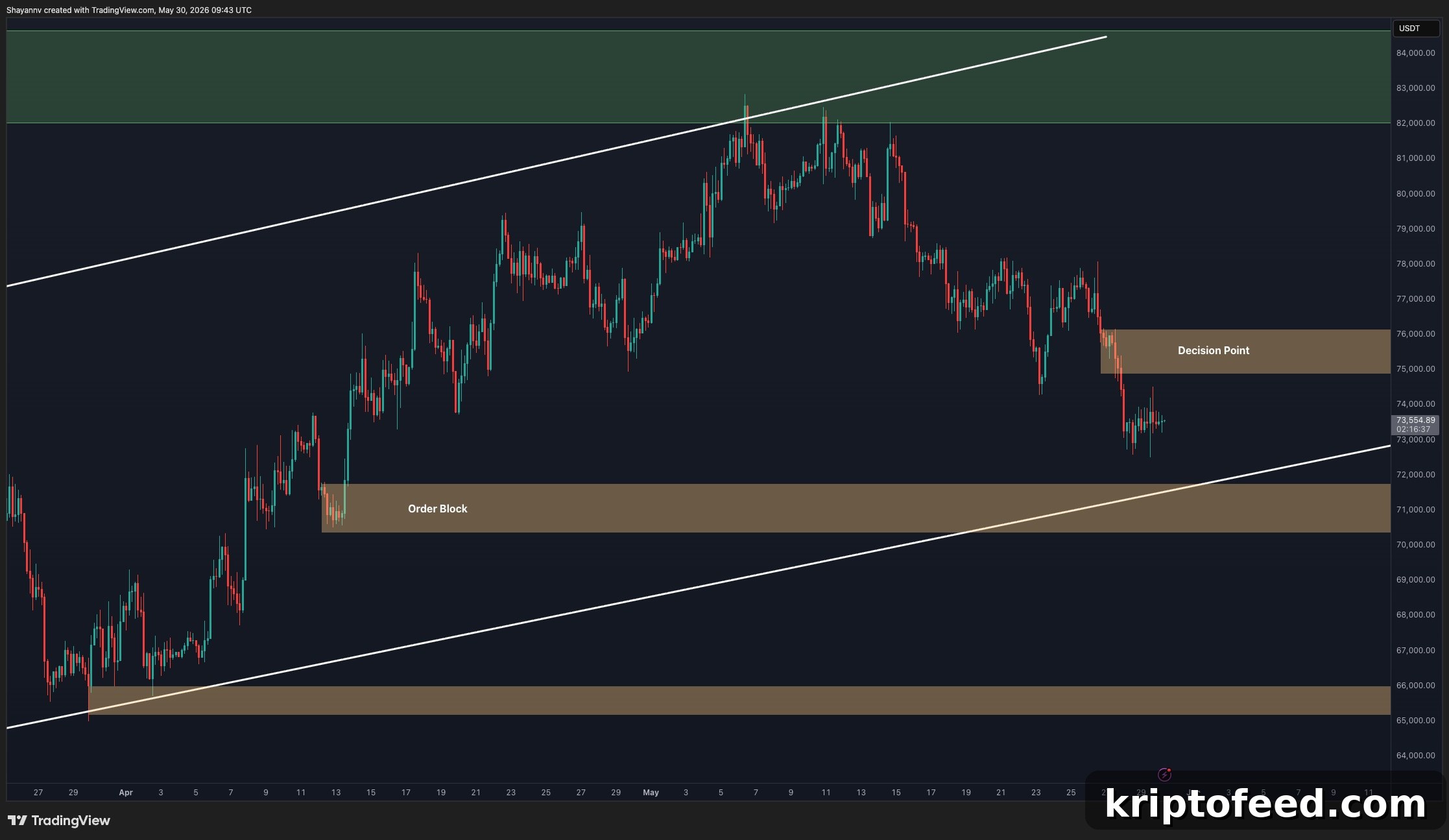
The 4-hour chart shows accelerating bearish momentum following the breakdown from the consolidation range near $75,000–$76,000. Sellers control the short-term trend, with lower highs and repeated rejection candles signaling persistent downside pressure.
Despite the pressure, Bitcoin is entering a critical order block between $70,000 and $72,000. Historically this zone has attracted significant demand and currently overlaps with the rising trendline support. How the market reacts at this level should determine the next major move.
A short-term bullish pullback is possible if buyers step in around this support cluster, in which case BTC could retest the $74,000–$76,000 area as a corrective rebound. If that support fails, however, bearish momentum could accelerate quickly toward the $65,000–$66,000 liquidity zone.
Accordingly, the $70,000–$72,000 range represents the most important short-term battleground between buyers and sellers.
Sentiment Analysis
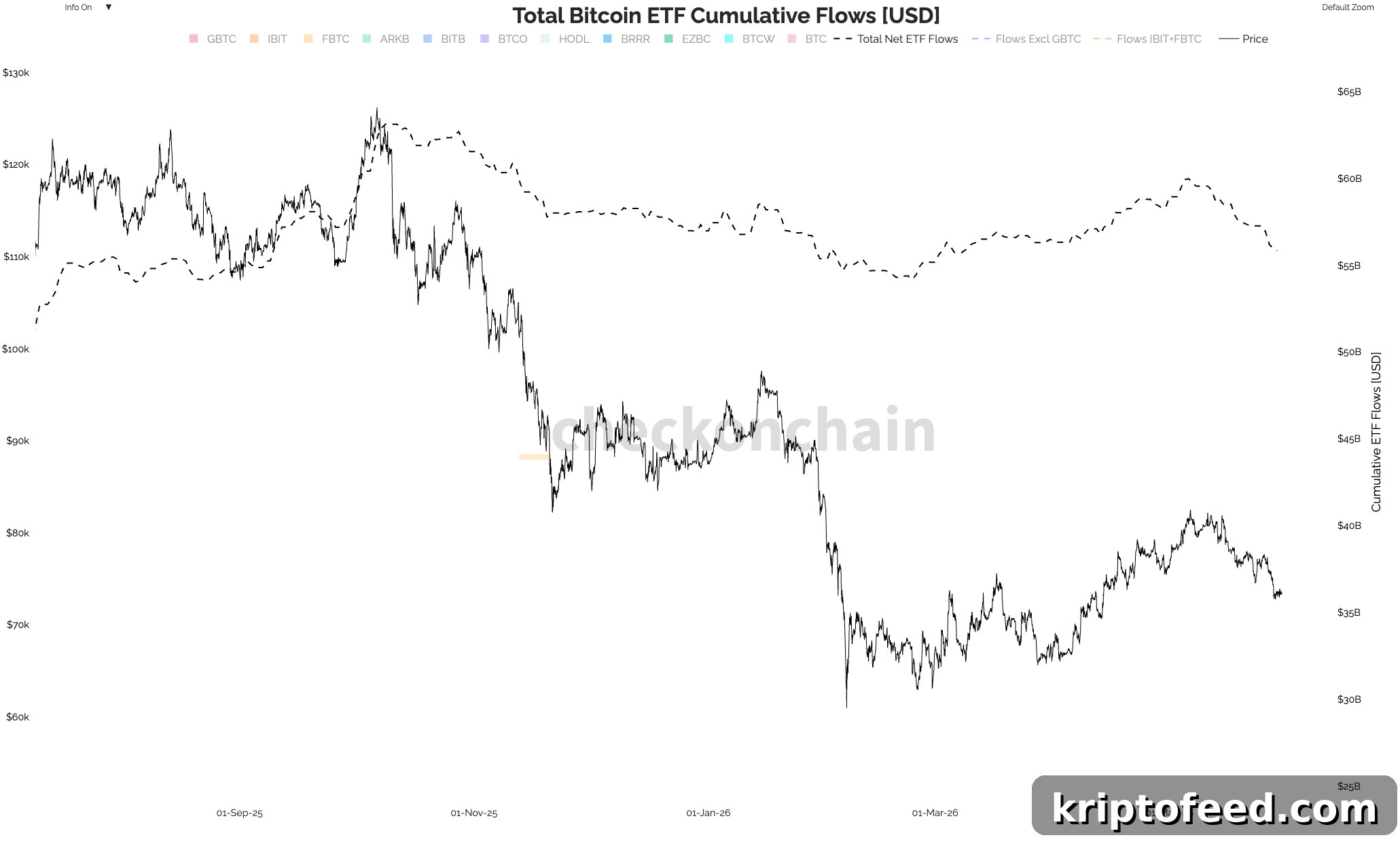
ETF cumulative flow data shows a notable divergence: despite several recovery attempts in recent months, cumulative ETF inflows have flattened and weakened during the latest correction.
This pattern indicates that institutional demand has cooled compared with earlier accumulation phases. The slowdown in spot ETF inflows points to reduced aggressive buying from large participants, which helps explain BTC’s difficulty sustaining rallies above the $80,000–$82,000 area.
Importantly, recent price weakness has occurred while cumulative ETF flows remain relatively flat rather than expanding. That suggests a lack of fresh capital entering the market at current levels.
Historically, sustained bullish runs in Bitcoin have coincided with accelerating ETF inflows. The absence of that dynamic increases the probability that the current market will remain corrective in the near term.
Still, if Bitcoin can stabilize around the $70,000–$72,000 support cluster and ETF flows begin to strengthen again, momentum could return later. Until that happens, weakening institutional demand combined with bearish technical structure keeps downside risks elevated, even as temporary relief rallies remain possible.