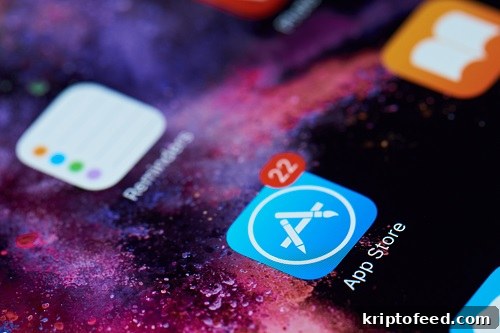
- Apple has removed the Binance, Kraken, MEXC and KuCoin apps from its App Store in India
- Meanwhile the new exchange Pullix (PLX) continues to draw strong interest during its presale
- Trading on a hybrid exchange gives users access not only to liquidity but also to robust security features similar to those found on top centralized exchanges
As cryptocurrencies appear to be entering a new bull market, reports from India indicate that Apple has removed several crypto exchange apps from its App Store in the country. The removals followed government warnings to exchanges about noncompliance with local regulations.
What does this mean for local crypto traders? Could the launch of a new exchange like Pullix (PLX) help unlock broader market access?
Apple removes apps after Indian government warnings to exchanges
A TechCrunch report from January 10 noted that apps for Binance, Kraken, MEXC and KuCoin were among eight crypto exchange apps that are no longer available in Apple’s App Store in India.
The move followed compliance notices the Financial Intelligence Unit of India (FIU-IND) issued to nine exchanges in December. The FIU named Binance, KuCoin, Huobi, Kraken, Gate, Bittrex, Bitstamp, MEXC and Bitfinex in its notices and instructed internet service providers to block their websites because the platforms are not registered in India.
The regulator also raised concerns that the exchanges’ operations did not meet India’s anti-money laundering (AML) and counter-financing of terrorism (CFT) regulatory standards.
Hybrid exchanges gain traction
Against this backdrop of government scrutiny and global regulatory pressure — combined with lingering fallout from events like the FTX collapse — decentralized exchanges (DEXs) have risen in prominence. Key appeals of DEXs include reduced centralized oversight, on-chain settlement and greater privacy, all of which continue to draw traders away from centralized exchanges (CEXs).
However, DEXs can face issues such as high transaction fees, price slippage and persistent liquidity challenges. That has driven interest in a newer category of trading venue that blends the strengths of both CEXs and DEXs: hybrid exchanges. These platforms aim to deliver liquidity and user-friendly order book features while preserving noncustodial control and on-chain benefits.
Traders seeking the best of both worlds may find Pullix (PLX) compelling. In addition to addressing liquidity limitations common on DEXs, Pullix offers security features and trading mechanics that investors expect from a hybrid exchange.
Why consider joining the Pullix (PLX) presale?
Pullix combines order-book convenience with institutional-grade, low-slippage trading for users. Security remains central: Pullix’s noncustodial approach gives users direct control over their assets while providing access to a feature-rich trading environment.
Industry observers highlight decentralized finance (DeFi) as a major trend for 2024 amid the renewed market optimism, and Pullix’s launch may coincide with rising demand across the sector. The platform positions itself as a user-friendly exchange for buying, selling and trading tokens, CFDs and ETF-like products.
The PLX token is structured to deliver exclusive benefits to holders, including a revenue-sharing mechanism not widely available elsewhere. After launch, PLX holders can access liquidity provision, yield farming and staking opportunities tied to the native token. The project’s whitepaper also emphasizes DeFi utilities and an NFT launchpad.
Pullix is currently built on Ethereum and is in its presale phase; PLX is available at $0.08 during the sixth stage of the sale.
To learn more about Pullix or to participate in the PLX token sale, join the presale.