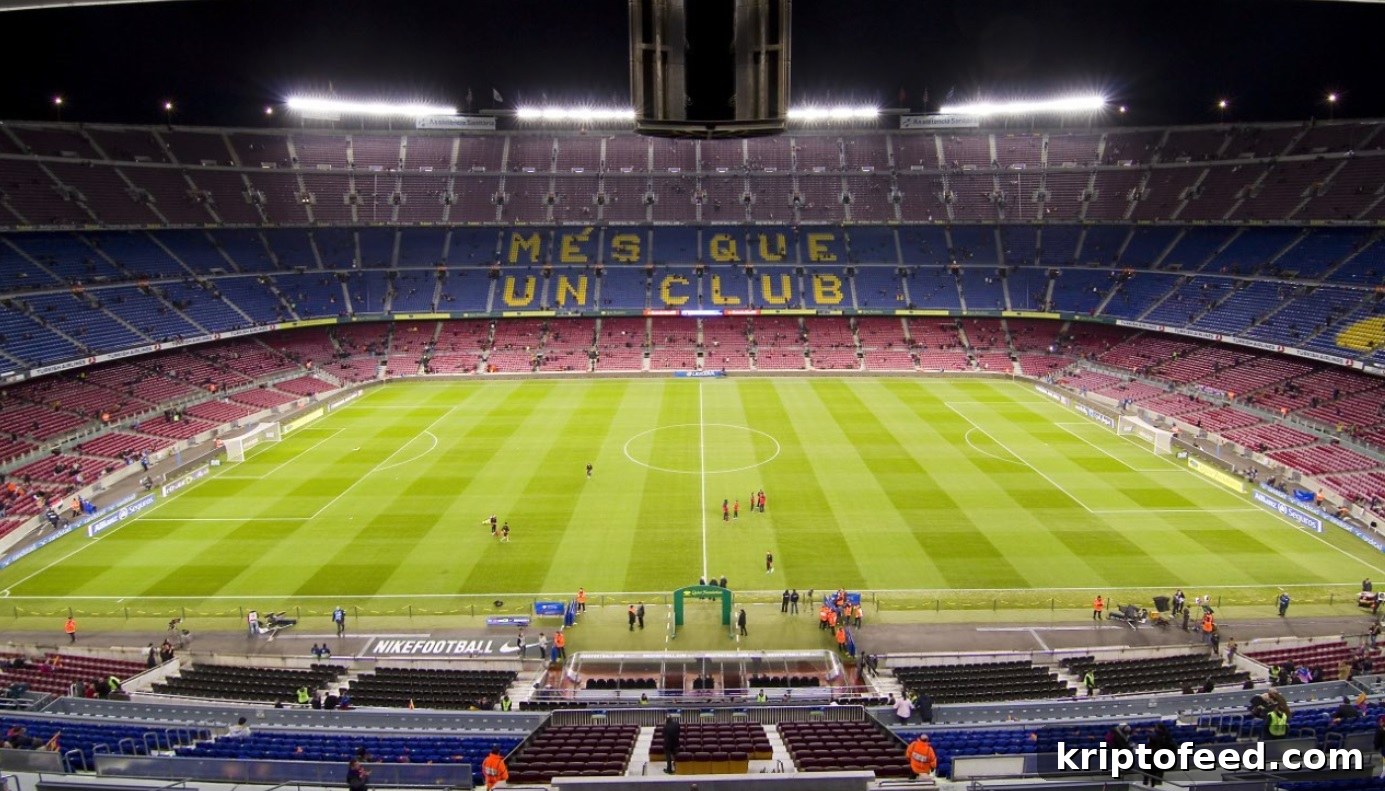
- Several cryptocurrency entities submitted bids, but the football club declined them
- The Catalan club is reportedly in advanced talks to finalize a deal with Spotify
Cryptocurrencies have been moving into the mainstream over the past two months, creating intersections between the crypto industry and other sectors. Companies and crypto brands have invested heavily in sports, especially across the United States and Europe, seeking the high-profile exposure that professional leagues and clubs offer.
In the U.S., crypto platforms have pursued partnerships with major professional leagues such as the NBA and MLB. In Europe, attention has focused on top-tier football clubs, which provide massive visibility—an essential factor for brand advertising. Earlier this month, Tezos announced an agreement with Premier League club Manchester United that includes placing the “Tezos” logo on players’ shirts.
Barcelona not open to cryptocurrency sponsors
With its agreement with current sponsor Rakuten set to expire, FC Barcelona began searching for a new front-of-shirt partner. As one of the world’s biggest clubs, Barcelona attracted numerous potential sponsors prepared to invest substantial sums to replace Rakuten in July.
Cryptocurrency firms were among those eager to secure the deal. Reports indicate that crypto exchange Binance and blockchain network Polkadot both expressed interest in becoming the club’s main shirt sponsor.
Polkadot reportedly offered $110 million for a five-year deal, while Binance is said to have proposed a four- to five-year agreement worth around $80 million. Outside the crypto sector, brands such as Spotify and Vegan Nations also showed interest, and Spotify is currently viewed as the frontrunner.
However, according to a Tuesday report from Spanish sports outlet Sport, club president Joan Laporta is not looking to forge ties with cryptocurrency entities despite their lucrative offers.
The report did not explicitly name Binance or Polkadot, although both submitted bids last month. Barcelona’s board cited a “lack of trust in the sector and insufficient financial solidity of the proposals” as the reason for rejecting crypto-related agreements.
Ultimately, the club appears to be prioritizing long-term stability and brand alignment over immediate financial gain from sponsors in a market it considers uncertain. Barcelona is reportedly in advanced negotiations with Spotify, which would align the club with a globally recognized digital music platform rather than a nascent financial sector.
This decision reflects broader concerns among major sports organizations about associating with emerging sectors that face regulatory uncertainty and reputation challenges. While some clubs have embraced crypto partnerships as a revenue stream and marketing opportunity, Barcelona’s leadership seems to favor partners perceived as more established and predictable.
As sponsorship deadlines approach, the outcome of Barcelona’s search will be closely watched by sponsors and fans alike. The club’s final choice will demonstrate whether global football powerhouses continue to move toward crypto partnerships or maintain a cautious distance.