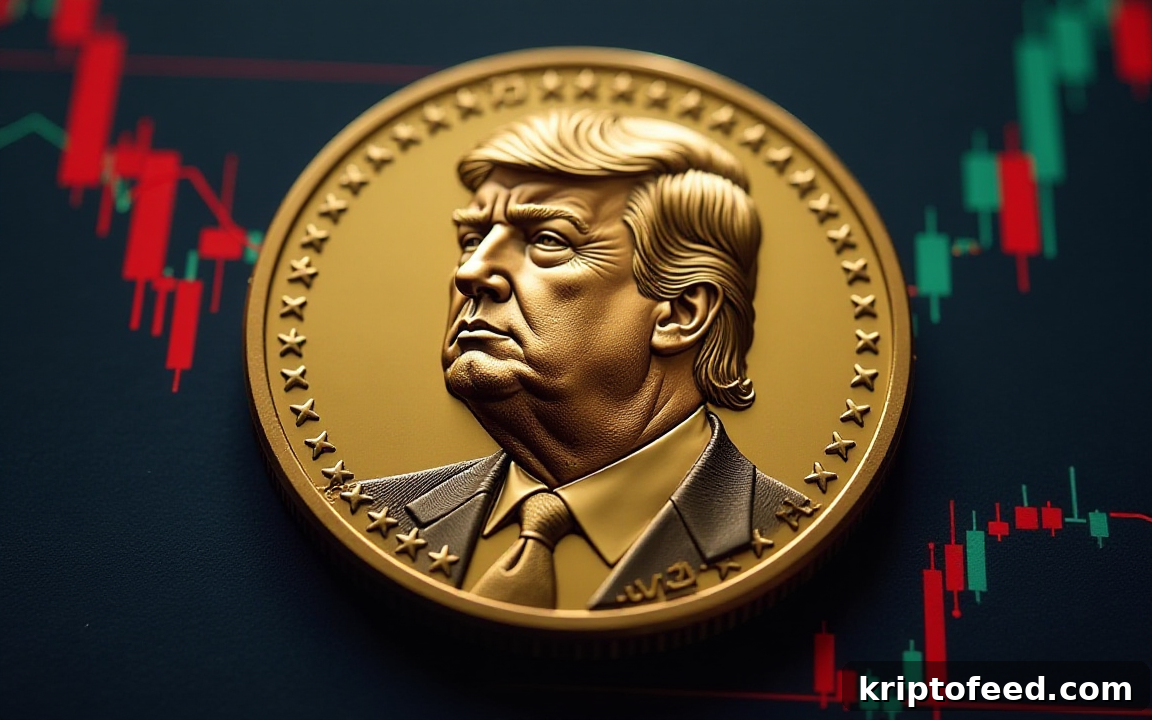
The first 100 days of U.S. President Donald Trump’s second term have reshaped the cryptocurrency and blockchain landscape through sweeping policy moves, regulatory changes and controversial personal involvement.
From launching a new meme coin ahead of Inauguration Day to creating a U.S. Bitcoin reserve, President Trump has advanced an aggressively pro-crypto stance while raising regulatory concerns, geopolitical tensions and notable market volatility.
A series of tariffs, executive orders and staffing appointments created both opportunities and uncertainty across digital asset markets.
WLFI token launch and a shake-up at the SEC mark the start of the term
On January 20, the day Trump was sworn in, the family investment firm World Liberty Financial (WLFI) launched the second phase of its token sale.
The non-transferable WLFI token was followed by a wave of crypto-friendly appointments.
Paul Atkins was named chair of the SEC on day one, replacing Gary Gensler, while Brian Quintenz was appointed to lead the CFTC.
David Sacks, a crypto proponent, was appointed chair of the President’s Council of Advisors on Science and Technology, positioning him as a central figure in shaping blockchain and artificial intelligence policy.
The WLFI token, initially marketed as a patriotic memecoin aligned with Trump’s return to power, gained traction on platforms such as X and Telegram.
The token’s branding emphasized themes of American exceptionalism and conservative values.
Although not tradable on major exchanges, and not transferable, the project attracted retail investors hopeful for potential future utility.
WLFI promotional materials also promised exclusive access benefits for top holders, a claim that culminated in a controversial event during the quarter.
Trade tariffs rattle miners while a Bitcoin Reserve takes shape
Within weeks of the new administration, Trump’s economic nationalism began affecting the crypto industry.
On February 1, broad tariffs were imposed on Mexico, China and Canada, citing security concerns and the fentanyl crisis.
Markets fell in response, and Bitcoin miners were particularly affected by increased import costs for essential hardware.
The situation intensified on April 2, when Trump introduced a minimum 10% tariff on all countries that tax U.S. goods, labeling it “Liberation Day.”
Meanwhile, on March 7, the president signed an executive order establishing a strategic Bitcoin Reserve.
While intended to formalize U.S. participation in cryptocurrency markets, the move disappointed many investors because it did not trigger immediate new BTC purchases.
$TRUMP meme coin dinner fuels backlash and ethics probe
The $TRUMP meme coin rose more than 50% in value to reach a market capitalization of $2.7 billion after the project announced the first 220 token holders would be invited to a black-tie dinner with the former president on May 22.
The event, hosted at his private Washington club, also included a VIP White House tour for the top 25 holders.
Chainalysis reported that Trump and his allies earned nearly $900,000 in trading fees from the token in just two days after the announcement.
Since its January launch, the token has generated $324.5 million in trading fees through a mechanism that redirects a portion of each transaction to insider wallets.
Reports indicate that the Trump Organization and affiliated entities control roughly 80% of the token supply, which is subject to a three-year vesting schedule.
The dinner offer prompted a strong reaction from lawmakers and watchdogs, with Senators Elizabeth Warren and Adam Schiff calling for a federal ethics investigation, arguing the event could amount to a “pay-to-play” scheme.
At the same time, broader Trump-linked crypto initiatives, including the $MELANIA token and World Liberty Financial, have raised $550 million, with Trump-affiliated entities entitled to 75% of net revenues.
These developments come amid a weakening of regulatory oversight over the cryptocurrency sector under the Trump administration.