- XRP futures filing made under the CFTC’s self-certification process.
- Ripple paid a $50 million SEC settlement last month.
- Grayscale, Franklin Templeton and others have applied for XRP ETFs
Coinbase has taken another significant step to expand its derivatives offerings by seeking regulatory approval to launch an XRP futures contract. The U.S.-based crypto exchange submitted paperwork to the Commodity Futures Trading Commission (CFTC) on Thursday to self-certify the new product, with a planned launch date of April 21.
The move positions Coinbase to offer its third crypto futures product in 2024, following earlier listings for Solana (SOL) and Hedera (HBAR). Unlike spot trading, futures contracts allow investors to speculate on an asset’s price movement without holding the underlying token.
Adding XRP could significantly improve institutional access to the token, particularly in the wake of Ripple’s partial settlement with the U.S. Securities and Exchange Commission (SEC) last month.
XRP futures launch scheduled for April
Coinbase Derivatives’ recent filing with the CFTC outlines plans for XRP futures to begin trading on April 21, pending regulatory review.
The submission uses the CFTC’s self-certification process, a mechanism that allows exchanges to fast-track product listings provided they comply with applicable rules. If the agency raises no objections, the product can go live without delay.
Coinbase’s decision to add XRP to its regulated futures lineup highlights its broader strategy to support both crypto-native and traditional investors.
In recent months the exchange launched futures products for Solana and Hedera, which both used the same CFTC pathway. Along with XRP, Coinbase is currently awaiting regulatory sign-off for futures contracts tied to Cardano (ADA) and natural gas (NGS), which are expected to go live later in April.
XRP price holds above $2
At the time of reporting, XRP traded just above $2 with limited intraday volatility. The token’s relatively stable performance contrasts with the broader crypto market, where prices remain highly sensitive to macroeconomic signals and regulatory updates.
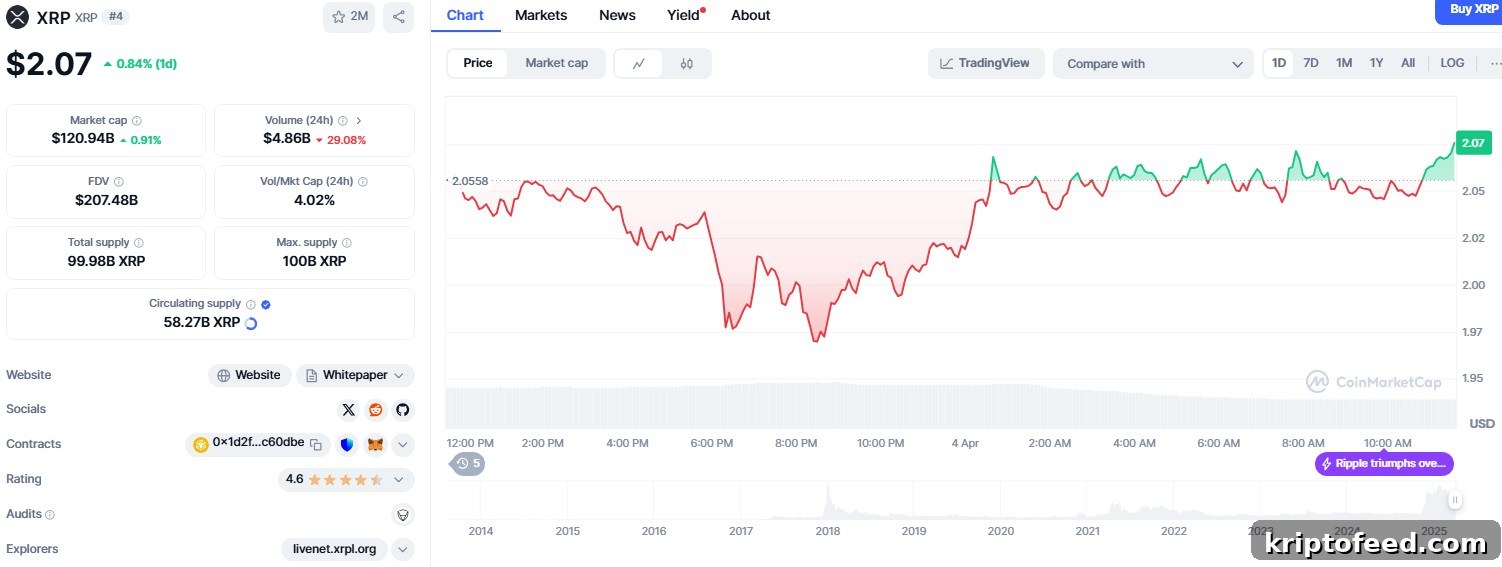
Source: CoinMarketCap
XRP’s core utility is as a settlement token for fast, low-cost cross-border payments. A regulated futures contract would allow investors to hedge or gain exposure to the token’s price movements without holding the asset directly.
That structure can be particularly attractive for institutions and high-frequency traders seeking to avoid custody risks associated with spot crypto holdings.
The move could also influence liquidity in the XRP spot market, since increased derivatives activity often correlates with deeper trading volumes and improved price discovery.
Legal clarity could unlock ETFs
Coinbase’s push for XRP futures comes shortly after Ripple, the company behind the token, resolved its long-running legal dispute with the SEC. In March 2024 the agency dropped its appeal in the case that began in December 2020.
Ripple agreed to pay $50 million as part of the settlement, a substantial reduction from the initially proposed $125 million. Ripple also withdrew its cross-appeal, effectively ending the multi-year litigation.
The resolution has sparked speculation that the SEC may now approve a spot XRP exchange-traded fund (ETF). Several major asset managers — including Grayscale, Franklin Templeton, Bitwise, 21Shares, CoinShares, WisdomTree and Canary Capital — have filed applications for XRP ETFs.
ProShares and Volatility Shares are also seeking regulatory approval for related investment products. Analysts suggest that regulatory clarity over XRP’s legal status could pave the way for larger financial institutions like BlackRock and Fidelity to develop new product offerings.
While the SEC has not issued approvals yet, industry participants say the settlement has removed a major obstacle to XRP’s acceptance within traditional financial frameworks.
Coinbase expands crypto derivatives
Coinbase’s self-certification approach is emerging as a test case for how crypto-native firms can operate within traditional financial regulation.
The exchange’s growing futures portfolio demonstrates how crypto firms are adapting to CFTC oversight, even as broader regulatory tensions between U.S. agencies persist.
The CFTC has signaled interest in expanding its role over crypto derivatives markets, creating jurisdictional friction with the SEC at times.
Coinbase’s ability to navigate this environment could determine how quickly new digital-asset futures products reach the market. As institutional interest grows, regulatory responsiveness will likely shape which platforms can compete at scale.