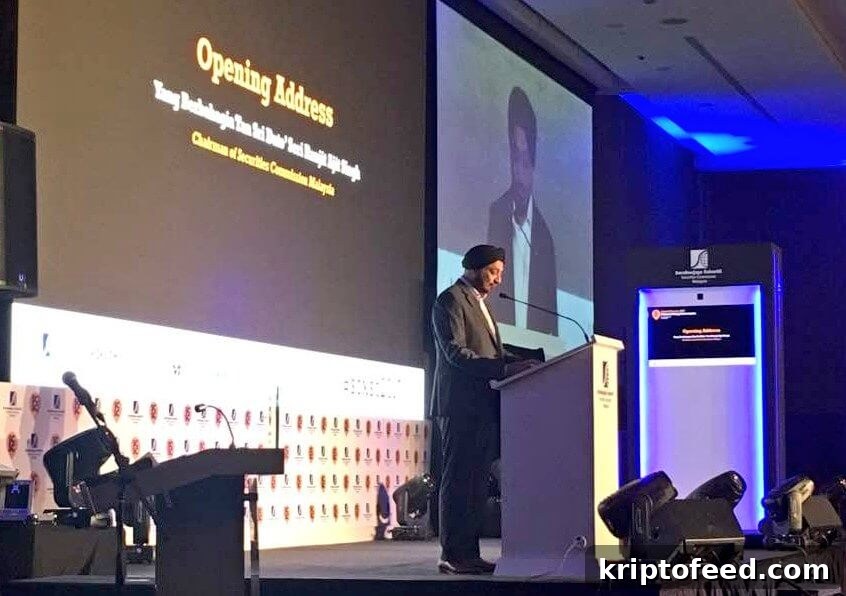
The Securities Commission Malaysia is piloting the use of distributed ledger technology for the over-the-counter (OTC) and unlisted markets. Launched through the SC’s Alliance for Fintech (aFINity) program, the project will assess how blockchain can support unlisted market activity and enhance market transparency.
“Historically, the unlisted and OTC market space has been opaque because of limited publicly available information,” SC Chairman Tan Sri Ranjit Ajit Singh said in his opening remarks at the 2017 SCxSC Digital Finance Conference.
“By using a distributed ledger as the technology underpinning the market infrastructure, all transactions and market activities would be recorded and made available to market participants, while still preserving transaction confidentiality.”
Insights from the pilot will be used to develop an industry blueprint. That blueprint will detail the technology architecture, key software capabilities and development standards intended to serve as foundational elements for parties interested in adopting a blockchain network for unlisted and OTC markets, Ranjit said.
The SC is employing Neuroware’s Cortex blockchain infrastructure to support unlisted secondary market activity across multiple blockchains, according to the startup.
Neuroware, operated by Malaysian company R1, assists organizations and individuals in exploring, adopting and implementing distributed ledger technologies. Its core offerings include developer tools, infrastructure, workshops and hackathons aimed at helping newcomers and developers build on blockchain platforms.
The Cortex platform is also used by Ata Plus, one of six licensed equity crowdfunding platforms in Malaysia. Ata Plus leverages Cortex to maintain structured, immutable records of issuers, deals and investments, and was the first regulated financial services provider in Malaysia to deploy blockchain in production.
At the SCxSC Digital Finance Conference, the SC also said it is reviewing relevant regulations and guidelines to enable practical and effective use cases of digital assets in the capital market, including secondary market trading of established cryptocurrencies and digital assets.
The Commission is coordinating closely with Malaysia’s central bank, Bank Negara Malaysia, on a regulatory framework expected to be published in the coming months.
“We note the growing interest among Malaysian investors in trading cryptocurrencies and digital assets,” Ranjit added. “To facilitate such activity within our market and to ensure appropriate investor safeguards, we are reviewing the regulatory framework to allow functional and effective uses of digital assets in the capital market, including secondary market trading of established cryptocurrencies and digital assets.”