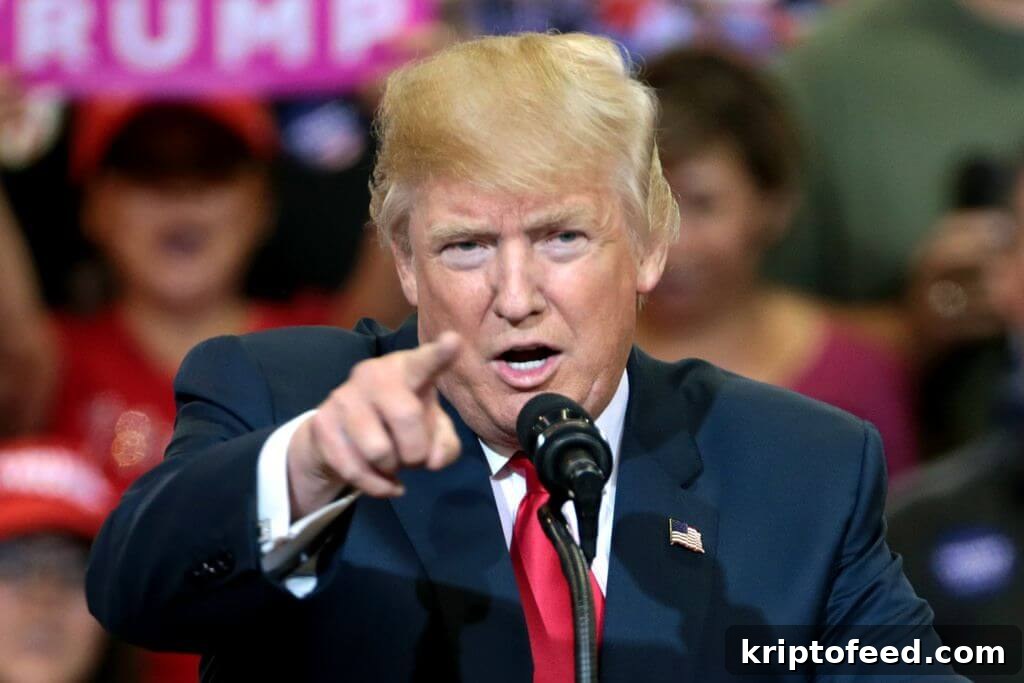
- Trump’s World Liberty Financial (WLFI) plans to launch a dollar-pegged stablecoin after raising $14 million.
- The project faces hurdles, having reached only 4.7% of its $300 million token sale target.
- Trump opposes a U.S. CBDC and pledges to ban government-issued stablecoins if re-elected.
Donald Trump’s World Liberty Financial (WLFI) is preparing to enter the cryptocurrency market with a plan to issue a dollar-backed stablecoin. The initiative aims to provide a stable on-ramp for traders and investors seeking shelter from crypto’s volatility by offering a token pegged to the U.S. dollar.
WLFI recently announced it raised $14 million in initial funding as the team advances development of the stablecoin and works to implement security and compliance frameworks. That early capital is intended to support technical development, audit processes, and the regulatory groundwork necessary for launching a product intended to operate at scale.
WLFI raised $14 million and is planning a dollar-pegged stablecoin
WLFI’s development timeline remains provisional. Sources indicate that building the required infrastructure and obtaining the necessary legal and security assurances could take some time before the stablecoin becomes available to the market.
If Trump were to return to the presidency, his administration could exert substantial influence over the regulatory environment for stablecoins. That potential leverage feeds into WLFI’s strategy and the broader political context surrounding the project.
Beyond the corporate effort, Trump has articulated a wider financial policy that opposes a U.S. central bank digital currency (CBDC). His stated position includes a promise to ban any government-issued stablecoin if re-elected, reflecting concerns about state control over digital money and emphasizing private-sector alternatives.
This stance aligns with his broader economic agenda, which includes preserving the 2017 Tax Cuts and Jobs Act provisions set to expire in 2025. Trump has also proposed reducing the corporate tax rate to 15% and enabling immediate expensing for equipment and research investments—policies intended to spur business investment and economic growth.
Despite these political and financial ambitions, WLFI faces tangible market obstacles. The project’s initial token sale, with a target of $300 million, has so far reached only $14.24 million in purchases, representing roughly 4.7% of the public sale goal. That relatively low uptake highlights the difficulty of gaining traction in a competitive stablecoin market where established issuers already operate and regulatory scrutiny is increasing.
Reports from the token sale indicated significant interest at launch—enough that WLFI’s website reportedly experienced downtime during the sale—but that initial surge did not translate into meeting the fundraising target. The disparity between launch interest and total commitments illustrates both technical challenges and the challenge of converting curiosity into sustained investor confidence.
As WLFI continues to navigate regulatory requirements and refine its technical design, the influence of Trump’s political platform and financial messaging will be a key factor shaping public perception and regulatory responses. Whether the project can secure broader market acceptance remains uncertain, especially given the heightened attention on stablecoins from policymakers, financial institutions, and crypto market participants.
In the coming months, observers will watch how WLFI addresses compliance, transparency, and reserve management—critical elements for any dollar-pegged token seeking credibility. The company’s ability to demonstrate robust audits, clear reserve holdings, and reliable governance will be central to convincing users and regulators that the stablecoin can function as a trustworthy bridge between traditional finance and the crypto economy.
Ultimately, WLFI’s progress will be influenced not only by technical execution and market demand, but also by the evolving political and regulatory landscape. The combination of a high-profile founder, ambitious fundraising goals, and contentious policy positions ensures the project will remain under close public and regulatory scrutiny as it moves toward a potential launch.