- The Financial Services Authority enforces AML compliance for stablecoin traders.
- Indonesia ranks seventh in the Global Crypto Adoption Index 2025.
- The government is examining Bitcoin as a potential reserve asset.
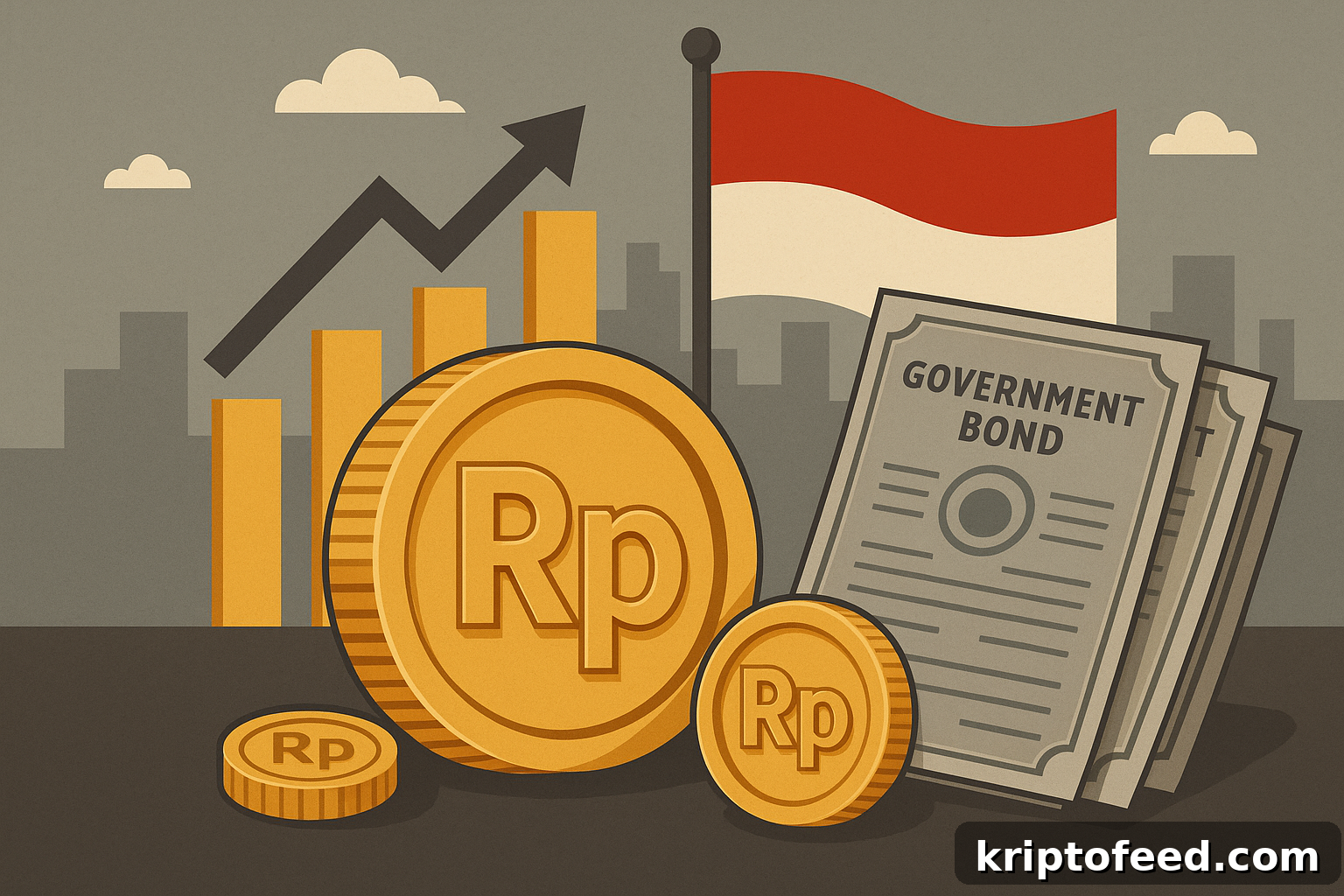
Bank Indonesia (BI) is advancing plans to introduce a blockchain-based financial instrument described as the country’s “national stablecoin version,” a digital asset backed by government bonds.
The initiative was presented by BI Governor Perry Warjiyo at the Indonesia Digital Finance and Economy Festival and the Fintech Summit 2025 in Jakarta.
It reflects Indonesia’s efforts to integrate blockchain technology into its monetary system through tokenized securities tied to a digital rupiah. The announcement was first reported by CNBC Indonesia.
According to the central bank, the new digital assets will take the form of tokenized government bonds backed by the planned digital rupiah, the central bank digital currency (CBDC) being developed by Bank Indonesia.
The project aims to combine monetary innovation with national financial stability and would place Indonesia among a handful of emerging markets developing bond-secured digital assets.
Digital rupiah to support Indonesia’s national stablecoin
Warjiyo said the bank will issue digital versions of its securities, referred to as Bank Indonesia securities in digital form, which will serve as blockchain-based representations of government bonds.
These digital securities will be backed by the digital rupiah, making them the foundation of what the central bank describes as Indonesia’s national stablecoin.
He explained that the stablecoin structure would rely on government bonds, known as Surat Berharga Negara (SBN), as the underlying collateral to ensure the asset’s value is tied to official instruments rather than speculative cryptocurrencies.
The initiative represents a move toward tokenizing the country’s bond market and creating an ecosystem where digital securities, stablecoins, and the central bank’s digital currency coexist.
Warjiyo said the plan aligns with BI’s broader digital finance strategy to improve transparency, efficiency, and liquidity in financial markets.
If successfully implemented, it could reshape how monetary authorities interact with blockchain infrastructure across Southeast Asia.
Blockchain integration into Indonesia’s monetary system
The introduction of a bond-backed digital rupiah is expected to strengthen Indonesia’s transition toward a blockchain-integrated economy.
Although stablecoins are not currently recognized as legal tender, their use for payments and transfers has grown, drawing the attention of the Financial Services Authority (OJK).
Dino Milano Siregar, head of OJK’s crypto and digital asset division, said the regulator enforces anti-money laundering (AML) rules and requires stablecoin traders to submit regular reports.
OJK’s oversight reflects increasing awareness of the potential systemic role digital assets could play, even when they are not formally accepted as payment instruments.
Siregar added that stablecoins are already used as hedging tools, especially those backed by credible assets such as government bonds or reserve currencies.
Their relatively lower volatility makes them attractive for remittances and cross-border settlements.
This practical use case aligns with BI’s objective to institutionalize a regulated form of stable value exchange through the digital rupiah.
Indonesia among global leaders in crypto adoption
Indonesia’s rapid shift toward digital finance is supported by strong adoption trends. The country ranked seventh in the 2025 Global Crypto Adoption Index published by Chainalysis.
It placed ninth in retail activity, seventh in value received through centralized exchanges, and fourth in decentralized finance (DeFi) transactions.
These figures highlight Indonesia’s growing role in global digital asset markets.
In August, local advocacy group Bitcoin Indonesia reported that government officials are exploring Bitcoin as a possible reserve asset, discussing how such holdings might diversify national reserves and support economic growth.
As Indonesia advances its stablecoin framework alongside the digital rupiah and considers potential Bitcoin diversification, it could emerge as a notable blockchain hub in Asia.
The combination of regulatory oversight, tokenized government bonds, and CBDC integration positions Indonesia alongside countries like China and Singapore that are redefining the future of state-backed digital assets.